The problem is not the framework. The problem is your inability to see it as a framework. You treat your own categories as universal and ours as particular. That is Orientalism.
Muslims as Politically Illegible Subjects
The global order treats Muslims as inherently suspicious and politically illegible. Western ideological frameworks, whether liberal or anti-capitalist, reproduce that structure by denying Muslim agency and imposing their own categories of interpretation.
Instead of using available political theories as methods to interpret and understand Islam through a contemporary lens, Western society’s social reflex defaults to finding more ways to dehumanise Muslim communities.
Hijab and the Liberal Feminist Gaze
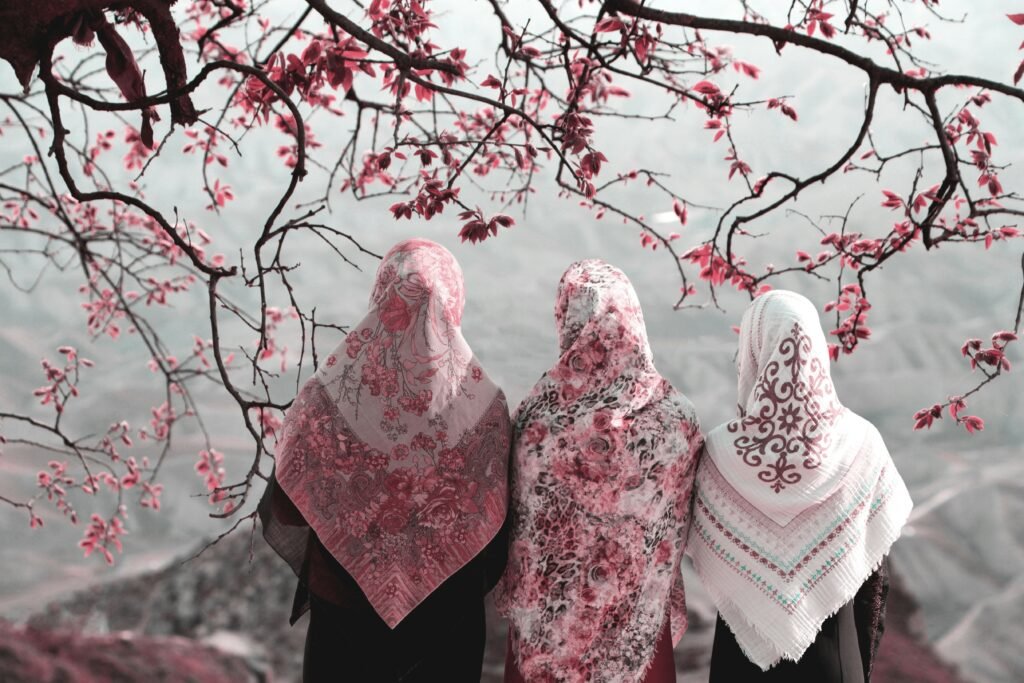
Westerners and those who subscribe to liberalism should stop pretending to care about women’s liberation when it comes to Muslim women and hijab. Stop patronising hijabi Muslim women by telling them to consider how other Muslim women may find hijab oppressive, as if we have not already done so.
We know how religion is weaponised in places where Muslims are the majority. We also know how your governments weaponise anti-Muslim rhetoric globally, and we understand where Islam stands in the global order.
Who are you trying to fool here?
Treating Muslim subjects as if we are insulated from that order and reminding us that “contradictions exist” is a projection of the privilege enjoyed by those who benefit from that system.
This same discourse also attracts certain audiences who love pretending that their paternalistic and bigoted remarks are a form of enlightenment. They project human characteristics onto God and frame their interventions as empowering women to deconstruct patriarchal violence in organised religions.
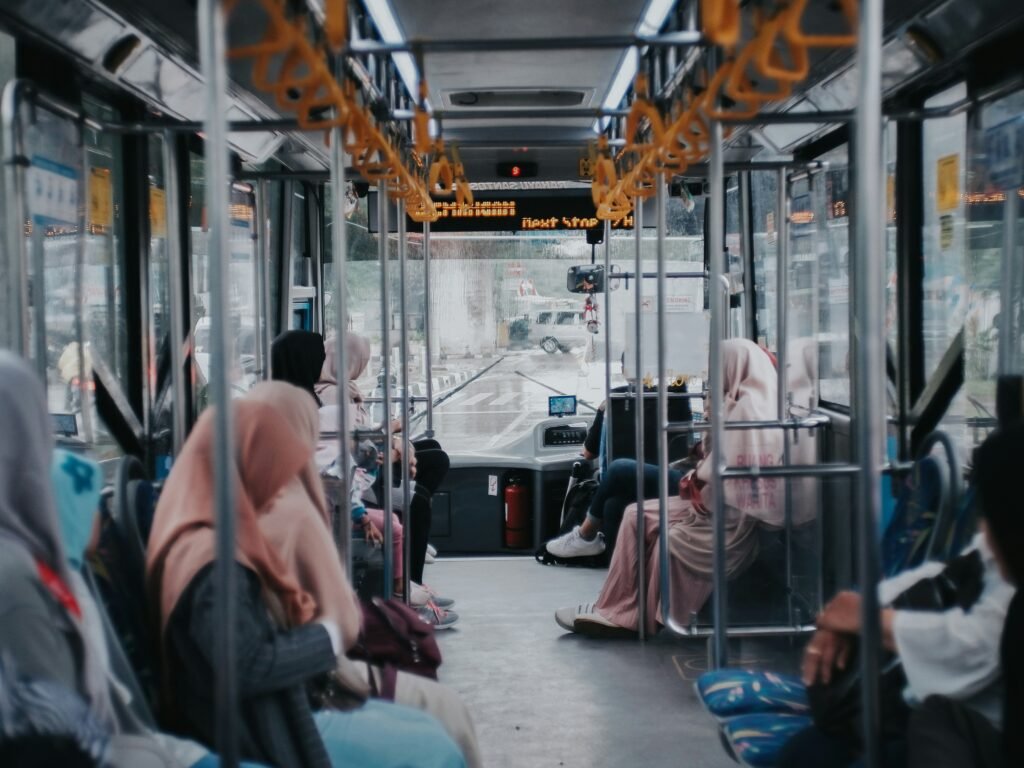
The idea that Muslim women choose to cover because of divine command does not compute for you. You assume it is inherently patriarchal to tell women what to wear.
Instead of recognising patriarchy as a parasite that latches onto religions and distorts divine teachings, you treat patriarchy as something religion inherently is.
Perhaps what you should ask yourselves in your journey of deconstruction and enlightenment is why, despite the motive behind said journey, you still end up associating human male characteristics with God in the first place.
What is hilarious is that you act as if you don’t live in a patriarchal society and a global capitalist system yourselves.
If you care about women’s liberation, perhaps start with how capitalism commodifies women’s bodies instead of imposing an imperial liberatory framework onto Muslim communities specifically. Nothing disgusts me more than bigoted liberals tiptoeing around their learned saviourism and imperial liberalism, criticising the hijab as oppressive in the name of feminism, when the whole concept of modesty in liberal discourse is entirely male-centred and focused on preventing women from being assaulted.
Muslim Feminism and Spiritual Agency
Ask yourselves why your idea of liberation is so heavily Western and Eurocentric that when you see Muslim women resisting patriarchy with an Islamic framework, you conclude that Muslim feminism is an invalid feminist movement.
Criticism of Muslim feminism does not only come from outside. It also comes from within the Ummah. There is no use denying that patriarchy is deeply embedded in society, so deeply that even many Muslims confuse Islamic values with regional cultures and customs that are intertwined with their history.
Muslim women are policed not only by patriarchal systems within our own cultures, but also by liberatory Western frameworks that repackage domination in the language of care.
The idea that spirituality is part of a woman’s personhood is foreign to a society where religion has always been part of a colonial project built on stolen land. Or rather, the idea that women assert agency and spiritual sovereignty through their religious framework at all is entirely incomprehensible.
Yet to recognise Muslim feminism as one of the comprehensive frameworks of women’s liberation is also to recognise Islamic traditions of resistance and liberation as coherent political thought. That recognition does not fit the imperial narrative of liberation through invasion, nor the fantasy of saving oppressed Muslim women in which imperial powers take such pride.
Perhaps the least surprising thing in all this discourse about “liberating” Muslim women is that the very same Islamic traditions were historically the language of resistance in many formerly colonised nations, and are still treated as inherently violent when mobilised against imperial powers today.
The Secular vs Religious Binary
Secularism solves issues in a world without exploitative systems of hierarchy and extraction. As long as these systems exist, secularism only breeds another problem: religious zealotry.
Muslims are not neutral subjects in the global order, and Islam is already positioned as suspect within it. The conversation about hijab does not happen in a vacuum. Take authoritarianism in Iran, for example.
Instead of seeing authoritarianism as inherently gendered and violent, as an inevitable feature of patriarchy, as a system that justifies itself by co-opting any moral framework, you view it as either “uniquely Islam”, an “Abrahamic religions issue”, or “proof that all religions are oppressive.” Why don’t you name a secular, non-authoritarian, non-misogynistic nation-state, then?
Beyond this, you cannot imagine a state’s moral framework or political ideology outside the categories of secular and religious. You default to binary thinking because you are so used to assuming that Western modernity and its political structures, shaped by the European state system that emerged after the seventeenth-century Peace of Westphalia and exported globally through imperialism, are the finish line of history.
The idea of pluralism as a state’s moral framework and ideology appears utopian to you because you ignore the recorded history of a pluralistic society within one of the earliest formal multi-religious political covenants, established where Islam first emerged in 622 CE in Medina.
But of course, Islam is violent and pluralism is a fantasy, right?
Indonesia as a Counter-Example
If 622 CE Medina feels too distant for you to care about, and you think your ignorance deserves grace because it is supposedly irrelevant to present material conditions, then consider a more recent example: Indonesia.
What is your excuse for not knowing about it?
Indonesia’s pluralistic morality emerged from its independence struggle, grounded in shared material conditions among more than 1,300 ethnic groups, a common hatred of colonial power, and political compromise that later became its ideological foundation.
Islam, nationalism, and Marxism once united Indonesians against a common enemy. Many who joined the Communist Party were themselves Muslims, and some of its early organisers had previously been members of Sarekat Islam. The ideological landscape of the anti-colonial movement was far more intertwined than the rigid categories Western political theory allows.
This was already recognised by Indonesian Muslim revolutionary Tan Malaka when he addressed the Fourth Congress of the Communist International in 1922.
…Today, Pan-Islamism signifies the national liberation struggle, because for the Muslims Islam is everything: not only religion, but also the state, the economy, food, and everything else. And so Pan-Islamism now means the brotherhood of all Muslim peoples, and the liberation struggle not only of the Arab but also of the Indian, the Javanese and all the oppressed Muslim peoples. This brotherhood means the practical liberation struggle not only against Dutch but also against English, French and Italian capitalism, therefore against world capitalism as a whole. That is what Pan-Islamism now means in Indonesia among the oppressed colonial peoples, according to their secret propaganda – the liberation struggle against the different imperialist powers of the world. This is a new task for us. Just as we want to support the national struggle, we also want to support the liberation struggle of the very combative, very active 250 million Muslims living under the imperialist powers. Therefore I ask once again: Should we support Pan-Islamism, in this sense?
Tan Malaka (1922)
Even Western intervention in post-independence Indonesia, aimed at eradicating leftist politics, could not rewrite the foundations of this pluralistic morality. Indonesia has had the largest Muslim population in the world since its formation, Indonesian Christians are not the same Christians preaching colonialism in American churches, and the constitution officially recognises six religions. Yet Indonesia is neither a theocracy nor a fully secular state. It is a multi-ethnic, multi-religious nation-state that fits neither category you recognise.
If the secular–religious binary were truly universal, the largest Muslim-majority country on earth should conform to it. Indonesia does not; it was even once home to the largest non-ruling communist party in the world.
With Orientalism deeply embedded in your education and upbringing, the ignorance of diverse worldviews in Western society is never neutral. It carries the assumption of Eurocentric teleology. Westerners should be the last to speak about liberation and the oppression of Muslim women in some Global South society while their own morality remains wrapped in the legacy of colonial moral language.
Orientalism in Western Leftist Politics
Even among Westerners who are loud about social justice and global solidarity, there are those who deny Muslim political agency in a different way. They see any government that stands against imperial powers as deserving unconditional support and claim that dissent from within those societies must be the work of foreign agents. See Iran, for example.
When will you admit that your morality is so distorted by Orientalism that you are willing to normalise authoritarianism as long as it stands against imperial powers? When will you admit that posts calling out dissenters as MOSSAD agents serve the narrative the IRGC wants, a narrative that even some pro-Palestine supporters have absorbed?
There are MOSSAD agents. There are also genuine dissenters. When will you admit it is easier to dismiss all dissent as foreign infiltration than to acknowledge that Iranians, even Muslims among them, possess political agency?
Reactionary to What?
The labelling of the Islamic political axis as reactionary serves the same function as the labelling of Islamic resistance and governance as violent. It is a way of seeing without context.
The IRGC, the Taliban, Hezbollah, Hamas. These names are invoked as self-evident proof of Islam’s political danger. What is never examined is the imperial violence that preceded them, that surrounds them, that ensures their continued legitimacy among populations with no other recourse.
To call something reactionary is to erase the question: reactionary to what? To drones? To siege? To the slow violence of sanctions that starve a population into submission?
The label is a shield. It protects the labeler from ever having to look at what they did first.
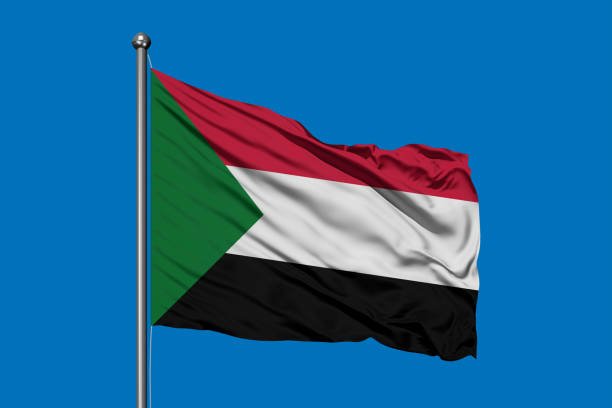
The same Westerners that frame the IRGC, the Taliban, or even Hamas as reactionary have no such label for Saudi Arabia or the UAE. Absolute monarchies where women until recently could not drive; where dissent is imprisoned; where Yemen has been devastated with American weapons; where the UAE is alleged to have supported genocidal violence in Sudan while continuing to deny it.
Where is the saviourism for women in these two countries?
Saudi Arabia and the UAE are not treated as reactionary; they are partners with Western imperialism itself. Westerners of any political alignment barely pay them any mind since US-led Western empire doesn’t bomb them.
The label is not about how a government treats its people. It is about whether it treats the West as friend or foe.
Beyond the Nation-State
What is deeply ironic is to find leftist keyboard warriors analysing the conflicts in the SWANA region to push Trotskyism into the region as a solution, with requirements that include some of the resistance groups leaving Islam. Islam itself has no need for a nation-state. Muslims are united under one banner of tawhid. This is something that you, Islamophobic Western leftists, are still unable to grasp.
The historical evidence of the existence of the very first multi-religious political covenant under a divinely ordained political and moral authority in Arabia should be a sign for you to actually unpack the Orientalism that is deeply entrenched in your everyday life.
Even before Trotsky coined a vision for workers of the world united under one banner, permanent revolution, the eventual dissolution of the state, and communism as the horizon, the Ummah in its original form was one community composed of Muslims, Jews, and pagans bound under a single political covenant, united by divine authority, with obligations that transcended tribe and religion. It was a political community not organised around the nation-state.
Even though the term Ummah now refers only to Muslims, we remain united under tawhid despite legal residence in different states.
Muslims have grasped and practised transnational solidarity in ways that you cannot understand with the same condescending reflex you share with the oppressors we condemn.
If someone questions why there should be a nation with a political system based on religion, or why religion has to be in government or resistance, the actual intellectually honest answer is: why should there be a nation-state in the first place? Why must the European export of Westphalian governance through imperialism be treated as the default form of self-determination? Why is the European nation-state presumed to be the only legitimate form of political organisation? And why should there be resistance groups at all?
What you, Western leftists, never ask is why your own framework, born from the European Enlightenment and industrial capitalism, should be universal. You assume it is. You assume that class analysis explains everything, that secularism is progress, that the nation-state is the natural unit of politics. When you encounter a political framework organised around divine command, you do not see an alternative. You see a problem to be solved.
The problem is not the framework. The problem is your inability to see it as a framework. You treat your own categories as universal and ours as particular. That is Orientalism. The very same framework that sees Muslims as backwards, that sees Islam as violent.
If colonial violence shaped these societies, why would their resistance frameworks and political systems be expected to look Western or secular?
If you have done material analysis, then why did you arrive at the same conclusion that imperial powers reached centuries ago in many former colonised nations across Asia and Africa, and again in this century in the SWANA region: that religion is part of the problem, only to then pretend that secularism solves it?
Islamic Resistance Did Not Wait for Europe
Western leftists’ worldview, whether they admit it or not, carries the legacy of European imperialism through Orientalism. It assumes that anti-colonial or anti-capitalist politics began with Karl Marx, and that Islamophobia only emerged after the Red Scare.
But while Marx and Engels were writing in Europe in the mid-nineteenth century, colonised Muslim societies across Southeast Asia, North Africa, and West Asia were already organising anti-colonial resistance through explicitly Islamic frameworks. The timelines overlap directly.
The Java War, led by Prince Diponegoro against Dutch colonial rule, began in 1825. Sufi networks in Algeria mobilised jihad against French invasion beginning in 1830. Later in the century, figures such as Jamal al-Din al-Afghani articulated pan-Islamic political resistance to European imperial domination.
The colonised Muslim world was not waiting for European theory to explain resistance. It was already theorising, organising, and resisting through Islam.
Over time, each country developed its own political ideology, as Indonesia did through political Islam, Marxism, and nationalism. Palestine offers another example.
But the interior moral structure still speaks the language of tawhid: that dignity is a birthright; that no one should be obeyed, feared, or revered except God; that human beings are God’s trustees on earth, bound by responsibility and accountability.
The Reality Muslims Already Live In
If you have engaged dialectically with the material conditions of SWANA countries, then what is the one thing these countries share? What has provided the language of resistance and liberation? What has united the resistance axis? What has been marked as enemy by imperial powers and, by extension, by the global order?
What kind of world are we living in now?
What you see as the US and Israel striking Iran, or Western powers occupying Palestine, or bombing Lebanon and Syria, or destabilising Afghanistan and Iraq, Muslims see and have always seen as our siblings being murdered by the same enemy that many former colonised nations—which are, unsurprisingly, mostly Muslim-majority—fought for independence from. That we could be next, in the form of Islamophobic policy that sees us as suspects.
You don’t see hijab bans in several Muslim-majority countries in the past as a problem, nor that they possess the potential to be one of the possible outcomes of this conflict, do you? And for you to propose Trotskyism as solution while treating Islam as part of the problem is to position yourself as the same enemy to us that Western imperial powers have always been.
But of course, keeping Muslim women and Muslims in general as either victims needing rescue, puppets of foreign intelligence, or reactionary is more ideologically safe, is it not?
To admit that Muslims possess agency would require acknowledging the contradictions Muslims have had to confront within Islamic traditions. It would require recognising Islam as a political ideology with liberatory frameworks and moral obligations rooted in divine command. It would require recognising the full humanity of Muslim societies in all their strength and contradiction.
Conclusion
Taken together, this brings us to a reality that is even grimmer, one that Muslims have long quietly inhabited. It is the reality where recent US strikes on Iran only add to the quiet and uncontested notion that Islam poses a grave danger to the global order, an order that relies on human hierarchy and the Western-centric end of history narrative. That it will not stop in Iran. Just as it has not stopped in Palestine and Lebanon. Just as it did not stop in Yemen, Iraq, Afghanistan, or Syria. Or even Bosnia and Herzegovina. Or even Indonesia, where Islam, nationalism, and Marxism coexisted peacefully once upon a time, along with five other nationally recognised religions.
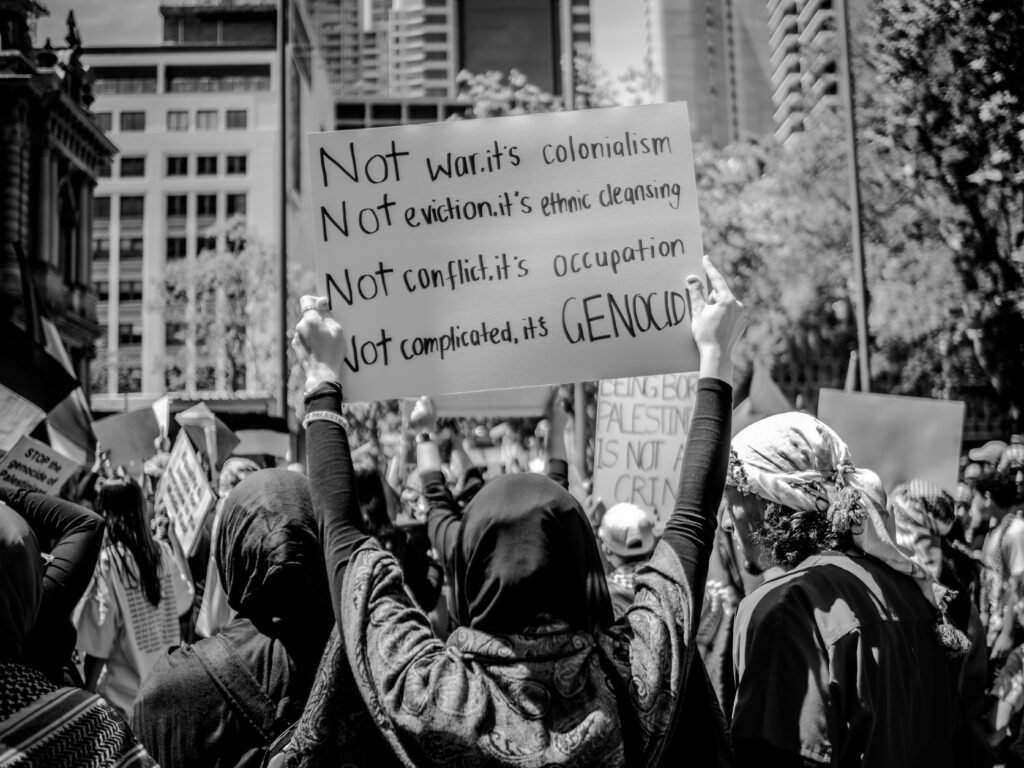
This also brings us to a reality where Western audiences with even a smidge of political consciousness project legitimacy onto the claim that religion has no place in government or resistance, then impose that claim upon Palestine, Iran, Syria, and Lebanon, countries in the SWANA region currently under assault by their imperial overlords.
That claim is born from the hypocrisy of European imperialism itself, which marks Islam as a threat while unleashing missionaries upon colonised nations. Now US-led Western imperialism repeats the same manoeuvre: treating Islam as dangerous while preaching colonialism in churches and secularism in the streets, online, and everywhere else, universalising secularism as solution.
After all, even accepting a form of governance outside the Western imagination requires recognising Islam as a functioning political framework in which divine obligations are inseparable from social obligations and together govern moral life. It requires recognising the historical and material conditions of the pluralistic society in 622 CE Medina, Indonesia, and in many Muslim-majority countries.
It requires accepting how limited and shallow your worldview is and how your knowledge of the faith and moral infrastructure of the colonised depends heavily on what has been normalised for you.
It requires accepting the material reality and consequences of your Orientalist education and upbringing, where Islam is socialised as “a religion spread through swords;” the myth that exists to launder European imperialism, which bastardised Christianity, and its American inheritance, which bastardised both Judaism and Christianity.
It requires intellectually honest recognition and discussion of patriarchal bastardisations of divine teachings.
Your inability to challenge a worldview in which multiple truths coexist is by design. But refusing to resist that design at all, and ending up in the same position as those who see us and our belief as the enemy, is a conscious choice.
The extent to which you, Westerners, regardless of your political alignment or personal identity, are willing to contort your morality to maintain your comfort, to avoid interrogating your own worldview and its implications, and to maintain the status quo rather than disrupt it, is violent in and of itself.
Author’s note:
As someone who grew up in Indonesia, with family history tied to one of the bloodiest legacies of the Cold War’s anti-communist purge, I have deconstructed my own faith and politics; I have used leftist political theories to translate and understand my religion better: why it manifests differently in each person and even in each country, and why my Muslim grandparents became involved in leftist political activism, with one of them even becoming a political prisoner. I have dealt with contradictions my whole life. I have resisted patriarchal conditioning and doctrines within Islamic traditions. I have argued theological and political reasoning with fellow Muslim men and women.
What I have laid out here is not new. But this is the first time I have had to lay it out in detail, as a mirror to those who claim to be allies in the West.
What I am trying to say is that imposing the moral language and political structure of the West onto the very regions it has dispossessed most throughout human history is a display of an extraordinary amount of hubris. That hubris belongs only to those who have internalised the hegemonic ideology, regardless of the political alignment such imposition wears as a mask.